
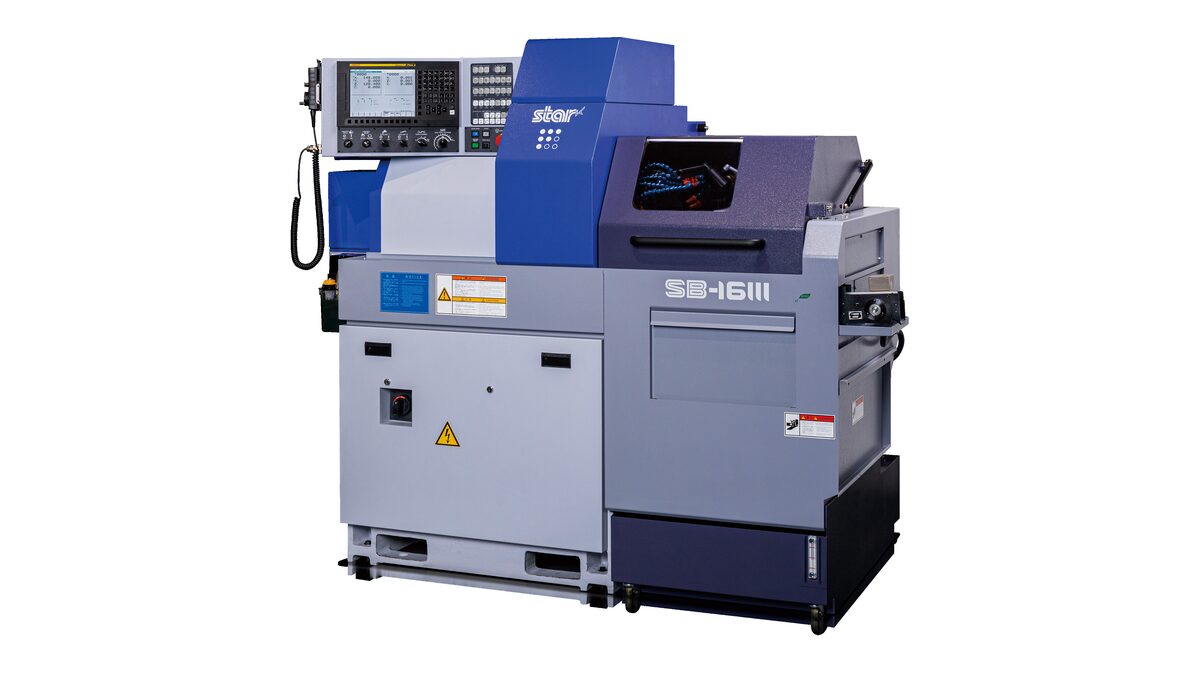
A CNC automatic lathe shows its true value when mass-producing large quantities of the same part.
However, high-volume lot machining — long, continuous production runs — brings its own problems that never appear in short jobs.
This page explains the problems that commonly occur in high-volume lot machining and how to avoid them.
In This Article
Common Problems in High-Volume Lot Machining
1. Dimensional Drift Over Time
In continuous machining, dimensions that were fine at the start can gradually shift over time.
The main causes are tool wear and thermal displacement of the machine.
As machining continues, the tool wears and the amount of material it removes changes.
In addition, the machine generates heat during operation, and its components expand and deform slightly, shifting the machining position.
As these effects accumulate, dimensions end up different between the start and end of the lot.
2. Tool-Life Problems
In a high-volume lot, tools reach the end of their life partway through the run.
Continuing to machine with a heavily worn tool leads to dimensional defects and poor surface finish — and in the worst case, tool breakage that produces defective parts in large numbers.
3. Chip and Coolant Problems
During long runs, chips can accumulate and clog the machine, and coolant can degrade or run low, stopping continuous operation or disturbing quality.
For chips, prevent accumulation and clogging by regularly cleaning the chip conveyor and filters, breaking chips up, and evacuating them with high-pressure coolant. For coolant, maintain performance by fully replacing it at set intervals or topping it up with fresh coolant at a regular frequency; with water-soluble coolant, manage concentration daily to prevent degradation and also check fluid level and temperature — all of which leads to more stable continuous operation.
How to Avoid Them: Countermeasures
Countermeasures for Dimensional Drift
For dimensional drift caused by tool wear, the standard approach is to use automatic compensation functions matched to the amount of wear.
For thermal displacement of the machine, use thermal-displacement compensation and dimension-assist functions, and stabilize dimensions by running a sufficient warm-up before production machining.
If more stable dimensional control is needed, it is also effective to feed measurements from in-machine measurement or automated external measurement back to the machine and apply automatic compensation.
By measuring dimensions during machining and automatically correcting deviations, you can keep dimensions stable throughout the lot.
Note that in-machine measurement and automated external measurement are often optional features depending on the manufacturer, so check the specifications before adopting them.
Countermeasures for Tool Life
Tool-life management — anticipating tool wear and replacing tools on a planned schedule before they reach end of life — is essential.
If you decide in advance how many parts to machine before replacement, you can prevent wear-related defects.
Countermeasures for Chips and Coolant
By reliably handling chips with oscillation cutting and high-pressure coolant, and regularly checking coolant volume and condition, you can stabilize long continuous runs.
The Importance of Warm-Up Operation
One thing often overlooked in high-volume lot machining is warm-up operation before machining begins.
When a machine starts running, its components generate heat, and dimensions drift slightly until the temperature stabilizes.
If you start production machining on a cold machine, dimensions will be unstable at first and will shift as the machine warms up.
To avoid this, it is effective to run the machine idle for a set period before production machining so the temperature stabilizes.
For tight-tolerance parts and long high-volume lots in particular, this extra step pays off significantly in quality stability.
To make a good part from the very first piece of the morning, it is important to get the machine into condition before starting to cut.
Frequently Asked Questions (FAQ)
Q. Dimensions change between the start and end of a lot.
A. Tool wear and thermal displacement of the machine are the main causes.
Automatic compensation functions are effective against tool wear, while thermal-displacement compensation and dimension-assist functions, together with sufficient warm-up operation, address thermal displacement.
If more stable dimensional control is needed, automatic compensation based on in-machine measurement or automated external measurement is another option.
Q. When should I replace tools?
A. The basic rule is to replace tools on a planned schedule before wear causes machining defects.
Setting a tool-life management rule such as "replace after machining X parts" prevents defects before they occur.
Typically, you set a part-count life for each tool in the tool-life management function and either stop the machine when it is reached or replace the tool with some margin before end of life.
Changes in machining sound, chips, and surface finish are also useful indicators.
Q. Any tips for stabilizing long unattended operation?
A. Combining chip control (oscillation cutting, high-pressure coolant), coolant condition management, and tool-life management makes stable continuous operation achievable.
Summary
High-volume lot machining is prone to dimensional drift over time, tool-life issues, and chip and coolant problems.
By combining dimensional compensation through in-machine measurement, planned tool-life management, and reliable chip control, you can maintain quality in volume production even over long runs.
For specific techniques, see also "Preventing Defects with In-Machine Measurement".