
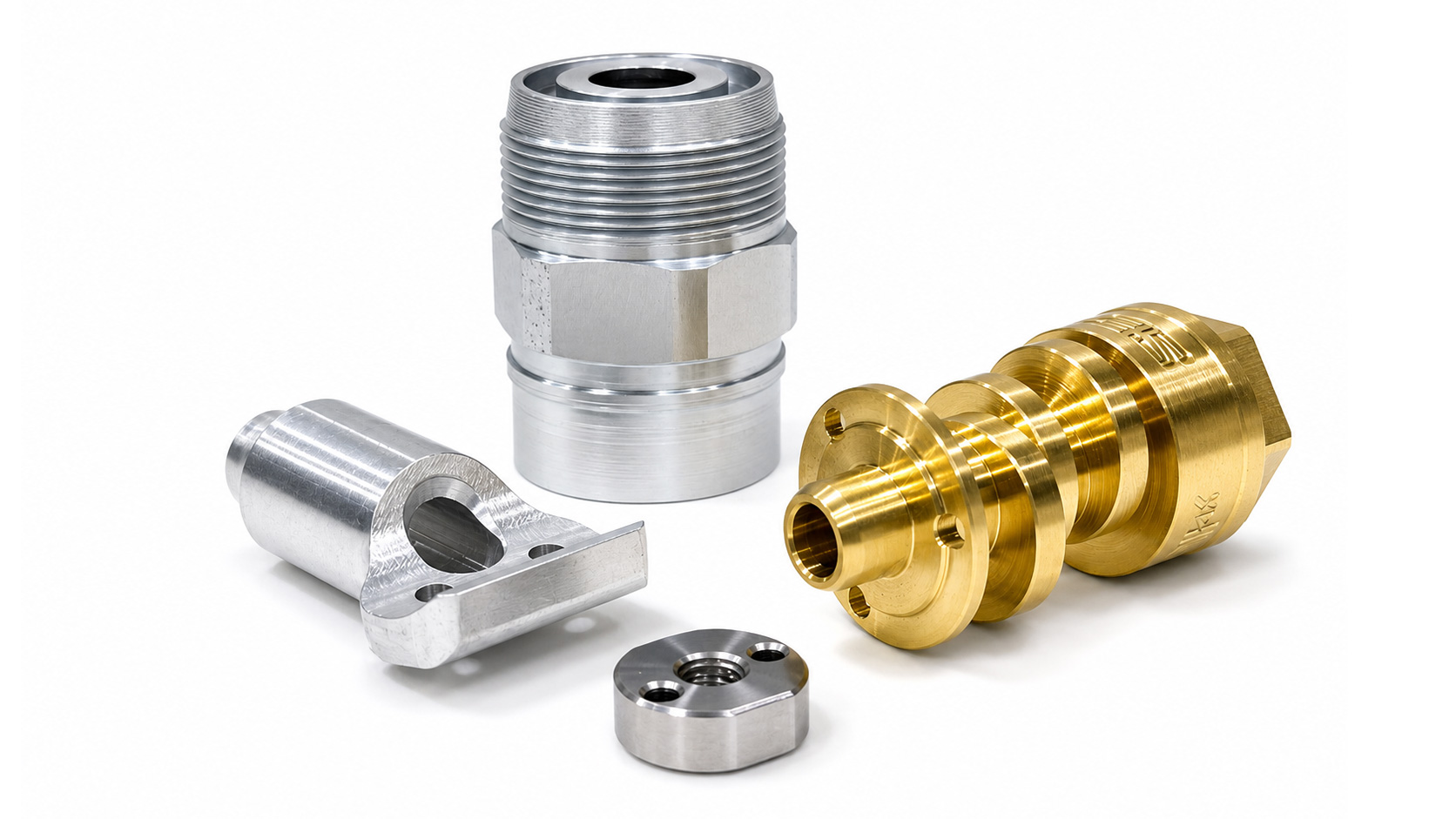
The parts made on CNC automatic lathes are extremely varied, and the machining points and difficulties change with each part's shape and application.
This category takes up typical workpieces and explains the machining know-how for each, part by part.
Use it as a source of hints when machining similarly shaped parts in your own shop.
Every Part Has Its Own Difficulties
Even within turning, the points to watch differ completely depending on the part being made.
For long, slender parts, for example, deflection during machining becomes the challenge, while parts with micro-scale holes make hole accuracy hard to secure.
For parts that include threads, the key is balancing thread quality with volume production.
Understanding a part's characteristics and choosing the machining method, tools, and conditions to match is the key to achieving both quality and efficiency.
This category organizes that part-by-part way of thinking.
Pages by Part Type
Turning Nozzles
Key points for turning nozzles, which demand micro-scale orifices with high concentricity and surface accuracy, and the CNC automatic lathes suited to the job.
Learn more →Turning Shafts
Key points for turning long, slender shafts that demand high roundness and runout accuracy, and why the Swiss-type is well suited to them.
Learn more →Turning Nipples
Key points for turning nipples, whose inner and outer diameters and threads must be machined together with high precision.
Learn more →A Way of Thinking Common to All Part Machining
Whatever the part, successful machining starts with sizing up its characteristics.
Shape (slender or complex?), material (easy to cut or difficult-to-cut?), required accuracy (dimensions and surface quality), and production volume (small lots or volume production?) — sorting these out brings the optimal machine type, tools, and cutting conditions into view.
Predicting the Hard Spots from the Shape
When planning part machining, being able to predict where the difficulties will arise from the shape's characteristics lets you take countermeasures in advance.
It pays to know the typical patterns.
Long, slender shapes make deflection during machining the hard spot.
Shaft-like parts are the classic case, and support from a guide bushing is effective.
Shapes with micro-scale holes make breakage of fine drills and hole accuracy the hard spots.
Nozzles are a typical example.
Shapes that include threads pose the challenge of balancing thread quality with volume production.
Nipples are a representative case.
Thin-walled shapes deform easily under cutting forces, calling for ingenuity in workholding and cutting conditions.
In this way, looking at a part's shape reveals the hard spots in advance.
Once you know where they are, you can choose the right machine, tools, and conditions and put countermeasures in place.
For choosing a machine type, see Differences by Type; for thinking through cutting conditions and tooling, see our technical columns; and for handling the problems that tend to occur during machining, see Troubleshooting & Solved Cases — together they will deepen your understanding of part machining.