
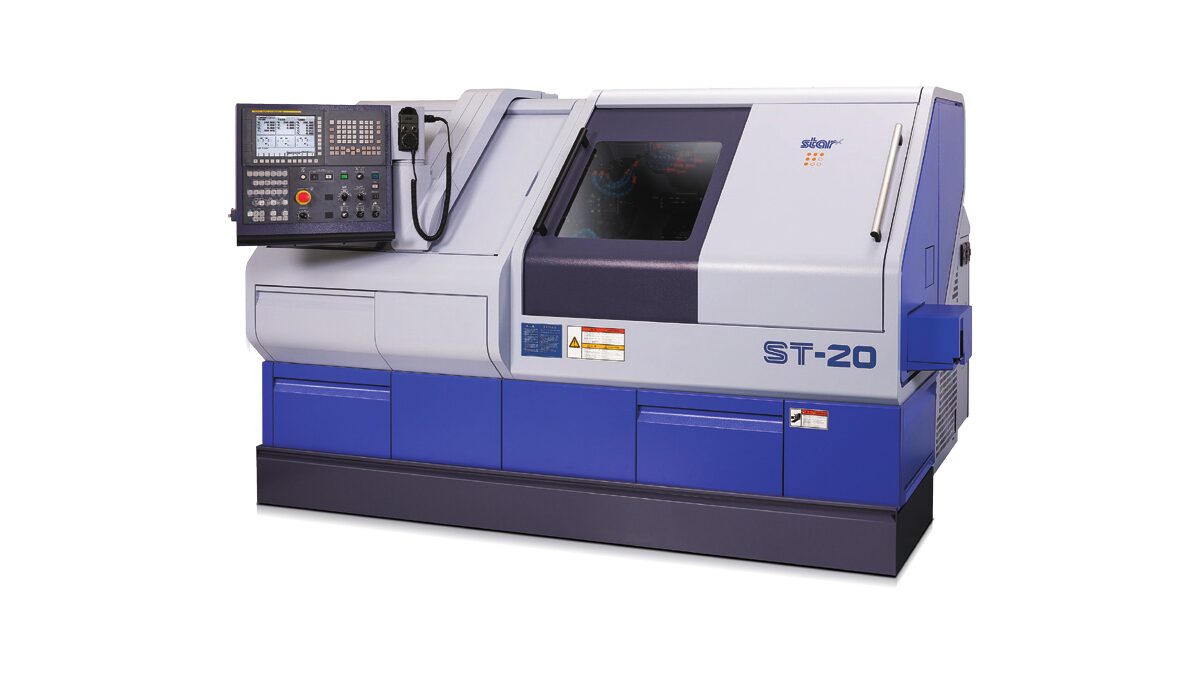
CNC automatic lathes can also be classified by the number of main spindles:
single-spindle automatic lathes with one spindle, and multi-spindle automatic lathes with several.
Which one to choose comes down to the balance of production volume, part complexity, and cost.
Let's look at the characteristics of each.
In This Article
What Is a Single-Spindle Automatic Lathe?
A single-spindle automatic lathe has one main spindle and machines one workpiece at a single position.
CNC-controlled single-spindle automatic lathes are by far the most widely used type today.
Advantages of Single-Spindle Machines
High flexibility: Simply changing the program lets you handle parts of many different shapes.
They cover a wide range, from high-mix low-volume work up to medium-volume production.
Simple setup: Because machining is completed at a single position, setup and adjustment are relatively straightforward, and changing over between part types is easy.
Easier to adopt: Compared with the multi-spindle machines described below, the machine structure is simpler and the barrier to adoption is lower.
Single-spindle automatic lathes are well suited to complex part shapes and to production with frequent changeovers.
Now that CNC is standard, even single-spindle machines carry multiple tools and a back spindle, handling fairly complex machining on one machine.
What Is a Multi-Spindle Automatic Lathe?
A multi-spindle automatic lathe has several main spindles (for example, six or eight) and machines multiple workpieces in parallel.
The bar stock mounted in each spindle moves through the machining stations in sequence, with the part progressing a little at each station.
Advantages of Multi-Spindle Machines
Overwhelming production speed: Because multiple workpieces are machined simultaneously, the production time per part is extremely short.
For churning out large quantities of parts with a fixed shape, they deliver productivity far beyond single-spindle machines.
Cost advantage in mass production: When production quantities are extremely high, the machining cost per part can be kept low.
Points to Watch with Multi-Spindle Machines
On the other hand, setup and adjustment are complex and require specialized skills, changeovers between part types take time and effort, and the machines themselves tend to be expensive.
They are therefore best regarded as machines specialized for producing a few part types in extremely high volumes.
How to Choose Between Them
As a rule of thumb, the selection criteria can be summarized as follows.
Cases suited to a single-spindle automatic lathe: high-mix low- to medium-volume production, parts with complex shapes, frequent changeovers between part types, or when you are installing your first machine.
Cases suited to a multi-spindle automatic lathe: producing parts of a fixed shape in extremely high volumes over a long period.
In the past, "high volume = multi-spindle (cam-type)" was the norm, but with the performance gains of CNC single-spindle machines, single-spindle CNC automatic lathes are now chosen for most applications.
The common division of roles today is to reserve multi-spindle machines for specific parts with exceptionally high production volumes.
Single-Spindle vs. Multi-Spindle Comparison Table
Here is a summary of the differences between the two types.
The balance between the number of part types and the production volume per part type is the deciding factor.
| Comparison Item | Single-Spindle Automatic Lathe | Multi-Spindle Automatic Lathe |
|---|---|---|
| Number of main spindles | One | Multiple (e.g., six or eight) |
| How machining proceeds | One workpiece machined step by step | Multiple workpieces machined in parallel |
| Production speed | Standard | Extremely fast |
| Setup & adjustment | Relatively simple | Complex; requires specialized skills |
| Changeover between part types | Easy | Time-consuming |
| Suited production | High-mix, low to medium volume | Few part types, extremely high volume |
How CNC Changed the "High Volume = Multi-Spindle" Rule
In the past, mass production meant cam-type multi-spindle automatic lathes.
They were ideal for producing parts of a fixed shape as fast and in as large quantities as possible.
With the dramatic performance improvements of CNC single-spindle machines, however, that conventional wisdom is changing.
Today's CNC single-spindle automatic lathes carry multiple tool posts and a back spindle, handling fairly complex machining at high speed.
Easy setup changes and flexible responses to part-type changes make them a good match for today's trends toward higher mix and shorter lead times.
As a result, CNC single-spindle machines are chosen for most applications, and the common practice is to use multi-spindle machines only for specific parts with exceptionally high production volumes.
Frequently Asked Questions (FAQ)
Q. Is a multi-spindle automatic lathe higher-performance than a single-spindle machine?
A. It depends on the application.
For producing a few part types in extremely high volumes, multi-spindle machines have an overwhelming advantage, but for high-mix production, complex shapes, or frequent changeovers, a flexible single-spindle machine is the better fit.
Q. If we are buying our first machine, which should we choose?
A. In most cases, a CNC single-spindle automatic lathe — flexible and easy to set up — is the starting point.
Consider a multi-spindle machine only when you have a clear outlook of producing a specific part in an order of magnitude higher volume over the long term.
Q. Can single-spindle machines handle complex machining?
A. Yes.
Today's CNC single-spindle machines are equipped with multiple tool posts, a back spindle, and live tools, and can finish complex small parts on a single machine.
Summary
Single-spindle automatic lathes excel in flexibility and ease of setup, making them suited to high-mix production and complex shapes.
Multi-spindle automatic lathes leverage the overwhelming production speed of machining multiple workpieces simultaneously, specializing in extremely high-volume production of a few part types.
With the shift to CNC, single-spindle machines have become the choice for most applications.
Choose the best type based on your own number of part types and production volume per part type.
For the full picture of the differences between machine types, see "Swiss-Type vs. Fixed-Headstock CNC Automatic Lathes."