
An automobile is made up of tens of thousands of parts.
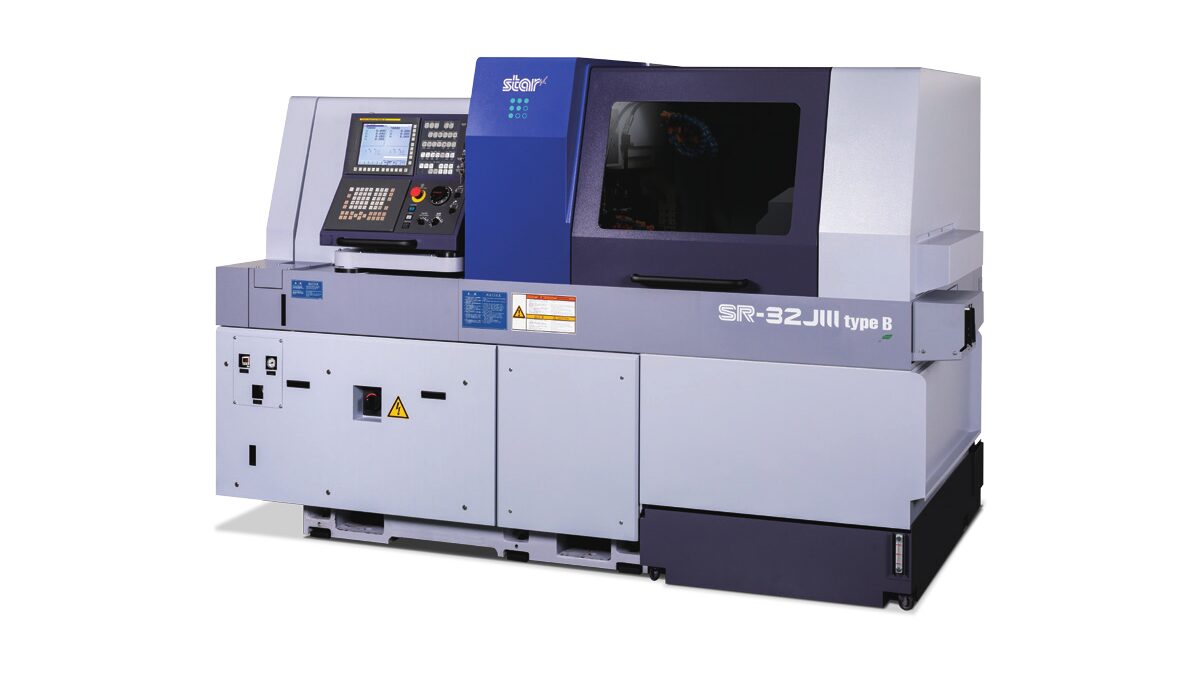
Among them are a great many small precision parts produced on CNC automatic lathes.
The automotive industry's demanding requirements — large volumes, consistent quality, and high precision — are exactly what the CNC automatic lathe was built for.
In This Article
What Automotive Parts Require
Machining automotive parts comes with several demanding conditions.
First, overwhelming production volume.
A single vehicle model may be built in the hundreds of thousands, so the same part is needed in enormous quantities.
Second, highly consistent quality.
Cars are products on which lives depend, and even slight dimensional variation is unacceptable.
The same quality must be held across tens of thousands of parts.
Third, cost competitiveness.
Precisely because volumes are so large, efficient machining that keeps the unit cost down is essential.
A CNC automatic lathe meets these requirements because it can mass-produce unattended from automatically fed bar stock while holding high precision consistently.
Which Parts Are Made
CNC automatic lathes are used to machine a wide variety of small precision parts in automobiles.
Typical examples include housings and terminals for various sensors, precision parts around the fuel injection system, safety parts for brakes and airbags, and all kinds of shafts, pins, and bushings.
In recent years, the shift to electrification (EVs) has created demand for new parts related to motors, batteries, and electronic control.
Even as vehicle architecture changes, the need to mass-produce small, precise parts remains, and the CNC automatic lathe's field of application keeps expanding.
Strengths in the Automotive Industry
Volume production of automotive parts presupposes long, continuous unattended operation.
That makes it important for chips to evacuate without jamming and for tool life to be stable. Combined with technologies such as oscillation cutting and high-pressure coolant, stable volume production is possible even in difficult-to-cut materials.
And as parts change with electrification, the CNC automatic lathe's ability to finish complex shapes on one machine through multitasking gives it a strong hand in adapting to new parts.
Quality Assurance and Traceability
The automotive industry places enormous weight on quality assurance of parts.
Because a single defect can lead to a recall or an accident, a traceability system that records and tracks when, on which machine, and under what conditions each part was made is required.
A CNC automatic lathe manages its machining programs and conditions as data, and when combined with dimensional monitoring through in-machine measurement and logging of operating data, it makes these quality-assurance requirements easier to meet.
Being able to guarantee stable quality with evidence to back it up is a major competitive advantage for an automotive parts supplier.
The automotive industry strongly demands a system that can mass-produce unattended while still substantiating quality.
Frequently Asked Questions (FAQ)
Q. Why are CNC automatic lathes used for automotive parts?
A. Because they combine high productivity with consistent quality.
The ability to produce enormous numbers of precision parts efficiently, all at the same quality, matches the automotive industry's requirements.
Q. Will demand for automatic lathes fall with the shift to EVs?
A. Even as vehicle architecture changes, the need to mass-produce small, precise parts remains.
New demand is also emerging for parts related to motors and batteries.
Q. Which parts are they used for?
A. They are widely used to mass-produce small, round precision parts — sensor parts, fuel-system precision parts, safety parts, and all kinds of shafts and pins.
Summary
The automotive parts industry demands overwhelming production volume, consistent quality, and cost competitiveness, and the CNC automatic lathe serves as a core machine for meeting those demands.
Even amid changes such as electrification, the need to mass-produce small precision parts continues, and the machine's field of application keeps expanding.
For other industries, see Industries Using CNC Automatic Lathes.