
Smartphones, computers, data centers, communications equipment...
Inside the electronic devices that underpin our digital society are countless tiny precision parts.
The electronic components and semiconductor industry is one of the fields where the CNC automatic lathe is most at home.
In This Article
What Electronic and Semiconductor Parts Require
Machining parts in this field has the following characteristics.
First, the parts are extremely small.
As electronic devices become smaller and more densely packed, their parts keep shrinking.
Micro parts around 1 mm in diameter, or smaller, are not unusual.
Next, high precision.
The smaller the part, the more directly a slight dimensional deviation affects performance or causes connection failures.
And then, production volumes on a different scale.
Electronic components are used in large numbers in each product and produced worldwide, so vast quantities must be made efficiently.
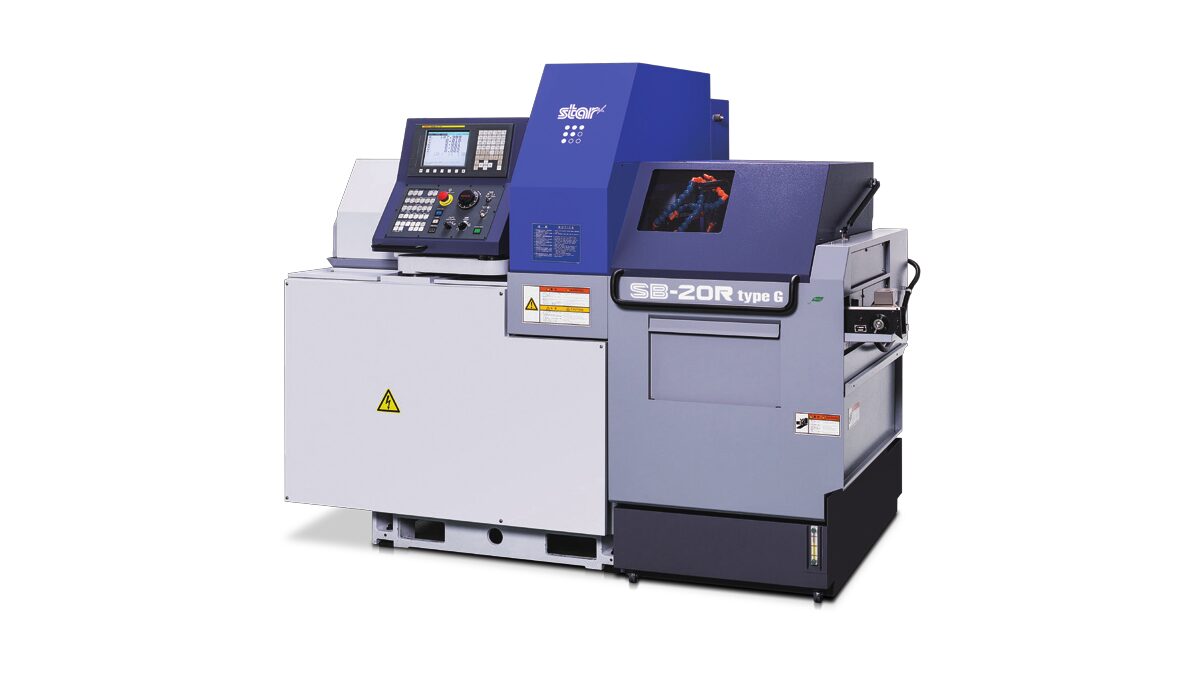
CNC automatic lathes — Swiss-types in particular — meet this field's requirements by mass-producing tiny, high-precision parts at high productivity.
Which Parts Are Made
There are many electronic and semiconductor parts where CNC automatic lathes come into their own.
Typical examples include connector pins and terminals that join boards and devices, all kinds of socket parts, precision parts for semiconductor manufacturing equipment, antenna and filter parts for 5G communications, and parts for data centers.
All share the traits of being tiny, high-precision, and needed in huge volumes — overlapping perfectly with the strengths of the Swiss-type CNC automatic lathe.
The more sophisticated products become, the finer and more precise their internal parts, and demand for automatic lathes keeps rising.
Strengths in the Electronics and Semiconductor Industry
In mass-producing micro parts, the key is to combine holding high precision at tiny sizes with producing in volume, stably, over time.
The Swiss-type CNC automatic lathe achieves both: its guide bushing support structure holds precision even on micro parts, and it mass-produces in unattended operation.
Connectors and terminals also make heavy use of copper and brass, materials whose chips tend to stretch out and are hard to manage.
In mass-producing these materials, chip breaking through oscillation cutting and high-speed machining on gang-type machines are used to good effect.
Growth Driven by Semiconductor and Communications Demand
The electronic components and semiconductor industry keeps expanding as digitalization advances.
In recent years especially, high-speed communications such as 5G and 6G, the build-out of data centers with the spread of AI, and the growth of IoT devices have strongly pushed up demand for related parts.
These fields require huge numbers of tiny connectors and terminals and precision parts for manufacturing equipment.
The faster and higher-frequency communications become, the more precision and quality the parts demand, and the more the Swiss-type CNC automatic lathe's high-precision machining comes into play.
Semiconductor manufacturing equipment itself also uses a great many precision parts, so the more active semiconductor capital investment becomes, the greater the demand for the automatic lathes that make those parts.
As a field underpinning the foundations of the digital society, electronics and semiconductors will remain a key arena for the automatic lathe.
Frequently Asked Questions (FAQ)
Q. Why are CNC automatic lathes used for electronic components?
A. Because they can mass-produce tiny, high-precision parts in quantities on a different scale.
As electronic devices become smaller and more densely packed, that demand keeps rising.
Q. Which parts are they used for?
A. A wide range of tiny precision parts: connector pins, terminals, socket parts, precision parts for semiconductor manufacturing equipment, and 5G-related parts.
Q. I hear many of the materials produce hard-to-manage chips?
A. The copper and brass used in connectors produce chips that tend to stretch out, so chip breaking through oscillation cutting and the use of high-pressure coolant deliver stable volume production.
Summary
The electronic components and semiconductor industry demands tiny, high-precision parts in volumes on a different scale, and Swiss-type CNC automatic lathes play a central role in machining connectors, terminals, and parts for semiconductor manufacturing equipment.
As products grow more sophisticated, that demand keeps expanding.
For other industries, see Industries Using CNC Automatic Lathes.